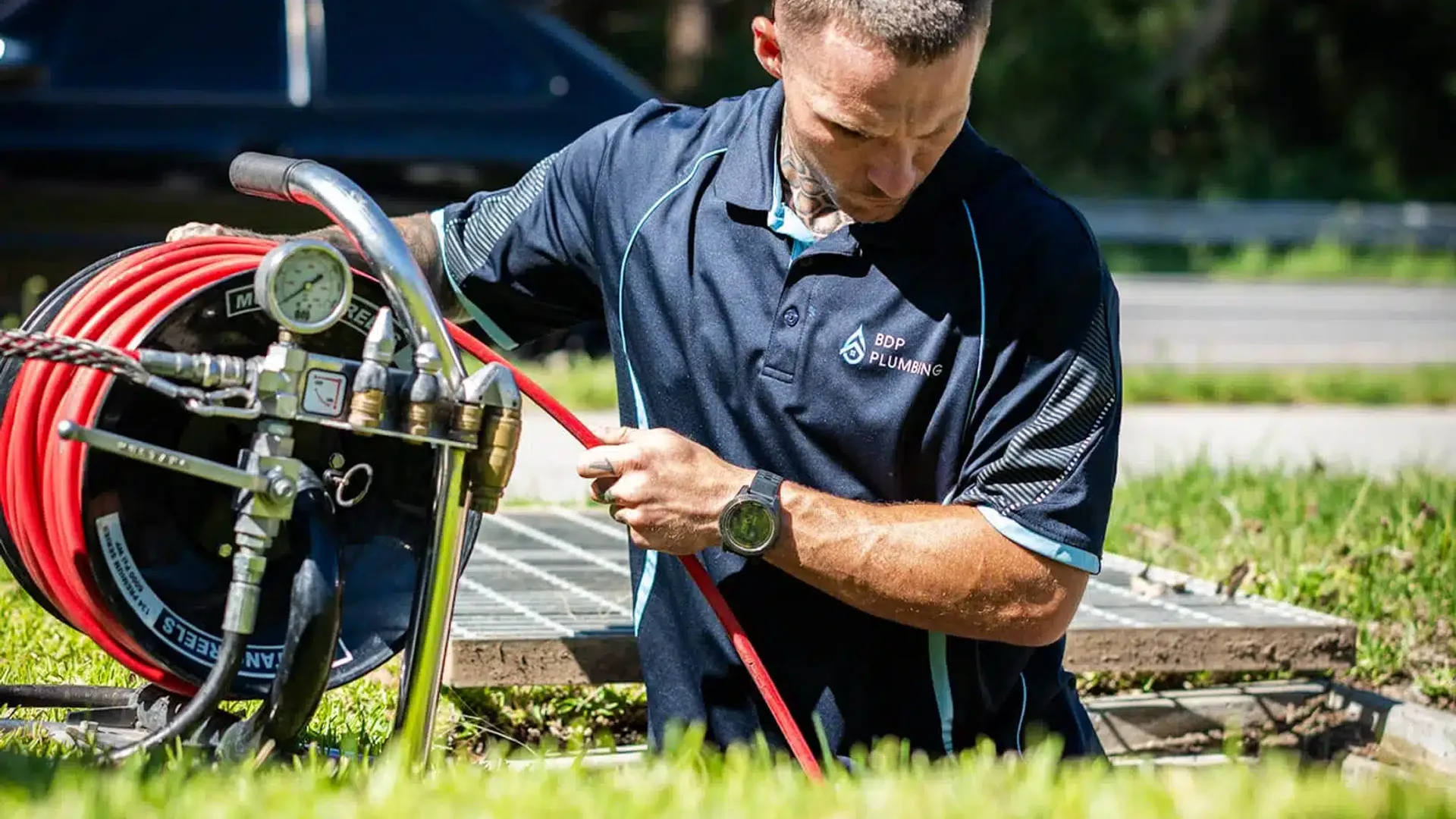
Hydro Jetting Georgetown
A blocked drain under a pre-war cottage rarely clears itself for good. Hydro jetting suits these lines better than any other clearing method, because high-pressure water scours the entire pipe wall instead of punching a single tunnel through the choke.
Jetting is standard kit here. Plumbers Georgetown runs the gear on the drainage truck, and every job starts with a $0 call out and a quote you approve before the hose goes in.
The full range of work sits back on the Georgetown home page.
What the Jet Does on the Line
High-pressure jetting earns its keep on old drainage. Here is what it does that a rod or an eel cannot.
Eel versus jet
An electric eel punches a tunnel through a root ball so water squeezes past. Jetting strips the whole mat off the pipe wall plus grease and silt, so the clean-out lasts longer.
How the nozzle works
The nozzle fires water forward to cut the choke and backwards to scour the wall. As the hose pulls back, the loosened debris flushes down the line to the access point.
Why pressure suits brittle pipes
Because water does the cutting, there is no steel cable grinding against brittle earthenware. That difference decides whether a line laid back in the 1800s survives the clear in one piece.
When a plunger is enough
One slow sink means a trap, and the blocked drains page covers that lighter work. Several fixtures backing up at once points to the shared line, which is where jetting earns its keep.
Why These Old Lines Need the Full Scour
The drainage under this suburb is as old as the housing stock, and that shapes every clearing job we run here.
Housing from the 1850s onward
Georgetown grew from the 1850s as workers' housing for the Goninans engineering and copper-smelting works, and plenty of the surviving cottages still sit on their original earthenware sewer lines.
Joints opened by reactive clay
Those lines were laid in short lengths, and a century in reactive clay has opened hairline gaps at the joints where tree roots thread in, thicken and choke the pipe.
Roots from the mature street trees
Mature street trees and old garden plantings push roots into those ageing clay lines along the compact pre-war streets, and the root mass builds year after year until the run chokes.
Throsby Creek catchment pressure
Stormwater across this pocket feeds the Throsby Creek catchment, so a line that has coped all winter can flood the yard in one summer storm once catchment runoff piles the pressure on.
Autumn leaf load
Autumn leaf fall from those mature trees washes into gutters and stormwater lines that were never sized for the load, and the silt sits there waiting for the next downpour.
Why the method matters here
A hole punched through a root mat in brittle clay clears tonight and blocks again by spring. Stripping the whole wall takes the surface new roots would grab onto, so the clear holds.
How a Jetting Job Runs
The sequence is the same whether the job is a sewer or a stormwater line, and it always starts with the camera rather than the hose.
Look before you jet
We camera the line before jetting on housing this old, because a collapsed section cannot be cleared, and finding that on screen beats retrieving a nozzle stuck behind a break anyway.
Jetting the run
The jet then works back from the opening, cutting roots and flushing debris ahead of it, with pressure set to suit the pipe's age rather than the machine's maximum output.
A second look on camera
A second camera pass verifies the line is clean end to end, and you see the footage, including any cracked joints worth repairing before the roots find them again.
Proving the flow
Before we pack up, the fixtures run and the drain takes everything the house throws at it. The CCTV drain inspections page covers the camera side in more detail.
Costs, Coverage and Emergencies
Pricing is agreed up front, the same as every other job we run, and coverage stretches across the neighbouring suburbs on our regular circuit.
What moves the figure
You approve the figure before any water runs. Three things move the number: the length of the run, how packed the choke is, and how easy the access is.
Access around the older blocks
Most cottages here have inspection openings at the boundary or out in the yard, which keeps the job simple. A line with no opening costs more to reach and clear.
Suburbs on the same run
The jetting gear works the surrounding pocket, taking in Waratah, Mayfield, Islington, Hamilton North and Broadmeadow, where plenty of the housing carries drainage from the same decades as ours.
When it becomes emergency work
A line already rising inside the house is emergency work, and the emergency plumbing crew handles it. The drainage hub lists the other clearing services we run.
Sewer and stormwater blockages get their own pages, because the causes and the fixes differ: the blocked sewer page covers main-line backups into the house, while blocked stormwater handles roof water and runoff. Jetting finishes off both of those clears.
Jetting questions from locals
Is hydro jetting safe for old clay and earthenware pipes?
Yes, once the pipe has been read. Earthenware that old is brittle, so we inspect first and set the pressure to match the pipe's condition instead of running the machine flat out.
How is jetting different from an electric eel?
An eel is a cable that bores one hole through the choke. A jet is water that scours the entire wall, which is what slows the next blockage down.
Do I need a camera inspection before jetting?
On housing this age, yes. An inspection confirms nothing has collapsed and shows where the choke sits, so the right section gets jetted at the right pressure instead of guessed at.
How long does a jetting job take?
A single root blockage in one run is usually done within the visit. Heavier root mass or a longer line takes extra passes, and the quote covers all of it.
Will the roots grow back after jetting?
They can, because jetting clears the pipe and leaves the tree standing. We show you the footage of any cracked joints inviting roots back, then you decide what repair makes sense.
Do you cover suburbs near Georgetown?
Yes. Waratah, Mayfield, Islington, Hamilton North and Broadmeadow are all on the regular run, and much of the housing out there drains through pipes from the same era.
Frequently asked questions
Is hydro jetting safe for old clay and earthenware pipes?
Yes, once the pipe has been read. Earthenware that old is brittle, so we inspect first and set the pressure to match the pipe's condition instead of running the machine flat out.
How is jetting different from an electric eel?
An eel is a cable that bores one hole through the choke. A jet is water that scours the entire wall, which is what slows the next blockage down.
Do I need a camera inspection before jetting?
On housing this age, yes. An inspection confirms nothing has collapsed and shows where the choke sits, so the right section gets jetted at the right pressure instead of guessed at.
How long does a jetting job take?
A single root blockage in one run is usually done within the visit. Heavier root mass or a longer line takes extra passes, and the quote covers all of it.
Will the roots grow back after jetting?
They can, because jetting clears the pipe and leaves the tree standing. We show you the footage of any cracked joints inviting roots back, then you decide what repair makes sense.
Do you cover suburbs near Georgetown?
Yes. Waratah, Mayfield, Islington, Hamilton North and Broadmeadow are all on the regular run, and much of the housing out there drains through pipes from the same era.
Plumbers in Georgetown and the suburbs around it
Book the jet in
Call (02) 4063 3422 and tell us what's happening. $0 call out across Georgetown, a clear quote before any work starts, and a job that gets made right if it isn't right the first time.